
Keep Your Cool, Billy: Why a 1993 VHS Tape Is Still the Greatest Golf Content Ever Made
Barrett Edri
April 30, 2026
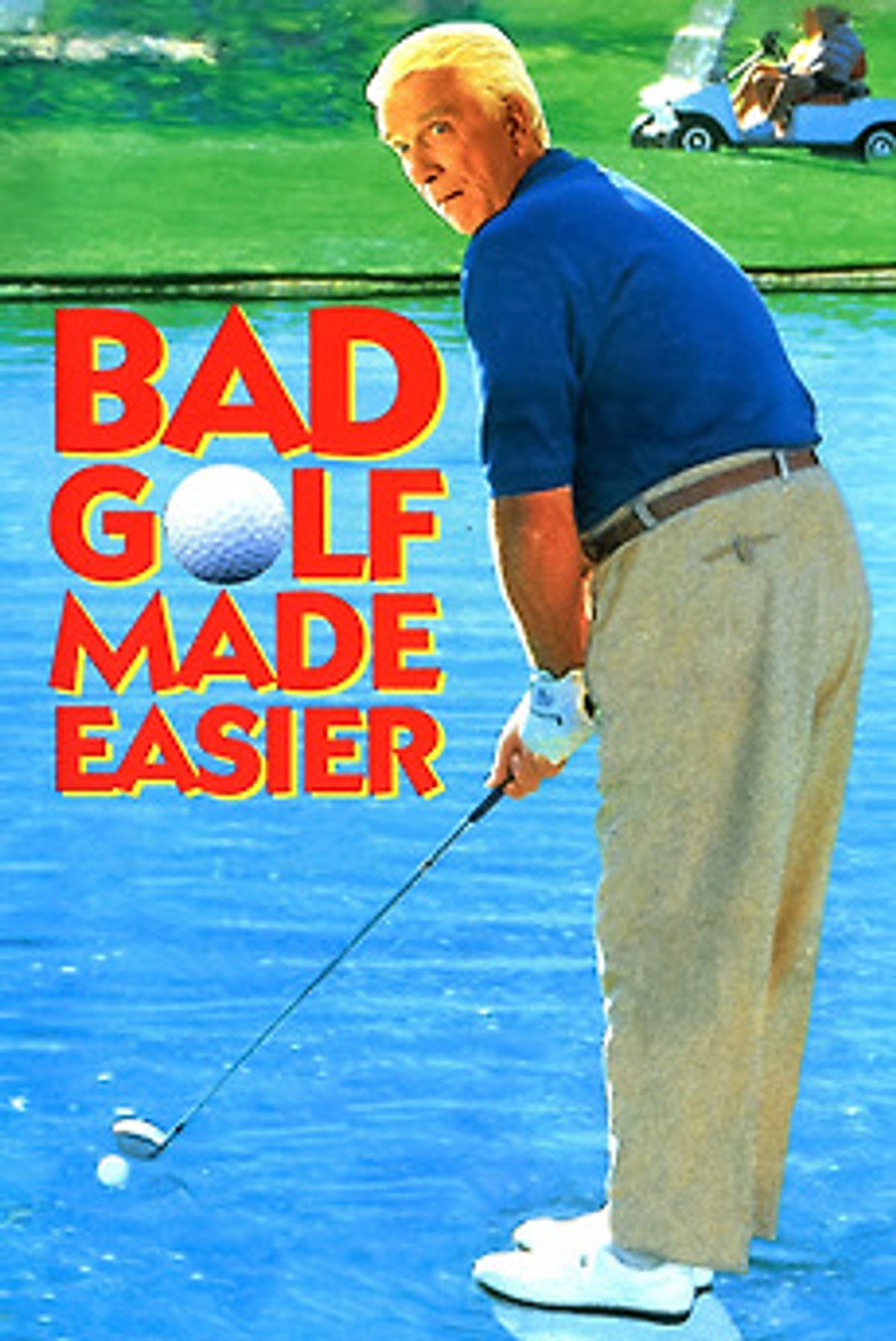
Thirty years of YouTube, Netflix, and LIV Golf later, Leslie Nielsen still made the most honest piece of golf content ever committed to tape.
In 1993, Leslie Nielsen, already immortalized through his mastery of deadpan absurdity in The Naked Gun and Airplane!, stepped onto a golf course with a camera crew, a struggling student named Billy, and thirty three minutes of content that captured golf more honestly than almost anything before or since. The VHS was titled Bad Golf Made Easier. Its slogan said everything: I don't play golf to feel bad. I play bad golf, and I feel good. More than three decades later, golf content has expanded into an enormous cultural machine. YouTube creators build media empires. Netflix produces prestige sports documentaries. LIV Golf spends staggering sums reshaping professional competition. Social media overflows with swing breakdowns, luxury course tours, celebrity appearances, and endless attempts to modernize the game for broader audiences. Golf has never been louder, more polished, or more visible. Yet for all of that growth, very little has matched the raw truth of Nielsen standing on a fairway in 1993, calmly explaining to Billy that golf earned its name because all the other four letter words were already taken. The Landscape Then To understand why Bad Golf Made Easier remains so singular, it helps to remember what golf media looked like in 1993. Weekend television broadcasts dominated the landscape. Sunday afternoons belonged to polished voices like Jim Nantz and Ken Venturi, whose reverent commentary elevated every fairway and green into something nearly sacred. Augusta’s pines and Pebble Beach’s cliffs were presented with grandeur, precision, and seriousness. The Golf Channel did not yet exist. YouTube was still more than a decade away. The internet had not transformed entertainment. Outside tournament broadcasts, golfers primarily consumed instructional VHS tapes. These videos followed an established formula. Professionals and teaching experts explained grip, stance, takeaway, weight transfer, and tempo with unwavering sincerity. Their promise was simple: follow these lessons, practice diligently, and improvement would follow. This format rested on an unspoken agreement. Golf could be mastered through discipline. The student simply needed proper instruction. Nielsen understood something deeper. He recognized that most golfers were not living inside this fantasy of steady technical progress. They were slicing drives into adjacent fairways, missing three foot putts, improving lies in the rough when nobody was watching, and quietly inventing personal rule interpretations to survive the emotional chaos of the sport. That truth became his masterpiece. What Nielsen Understood Bad Golf Made Easier brilliantly mirrors the structure of traditional instructional videos. Nielsen plays the wise golf mentor. Billy serves as the frustrated pupil. Each segment presents common on course situations, complete with supposed lessons and strategic advice. The difference is that Nielsen’s lessons expose the psychological and moral gray zones every golfer already knows intimately. He teaches Billy how to bribe starters for better tee times. He demonstrates how to maximize free drop distance. He explains that a missing ball should be declared stolen rather than lost, reframing penalty as victimhood. He explores methods for subtly improving lies, manipulating opponents, bending etiquette, and weaponizing technicalities. Every absurd suggestion resonates because it draws directly from thoughts countless golfers have entertained, even if silently. Nielsen’s genius was never “invention”. His brilliance came from vocalizing golf’s hidden truths with absolute sincerity. His delivery never breaks character. He offers ludicrous strategies with the same composed authority real instructors used when teaching bunker fundamentals. That unwavering seriousness transforms parody into revelation. The result is hilarious, though its power comes from recognition. Nielsen exposes golf exactly as many amateurs experience it: frustrating, irrational, morally flexible, and deeply joyful. A recurring etiquette obsessed snob appears throughout the film, functioning as the embodiment of golf’s rigid traditionalism. He polices traps, decorum, and proper conduct. Nielsen dismantles him repeatedly, reflecting the eternal conflict between golf’s official standards and its lived reality. That tension remains central to the game itself. The Wisdom That Endures The script is packed with lines that have endured because they reveal uncomfortable truths golfers instantly recognize:
- Never take lessons from your father.
- Never teach your wife to play golf.
- Never play your son for money.
- Never buy a putter until you've had the chance to throw it.
- Always limp with the same leg for the entire round.
- The statute of limitations on forgotten strokes is two holes.
- Whatever you think you're doing wrong, that may be the one thing you're doing right. These jokes land because they are rooted in emotional reality. Golf has always been a sport of contradiction. It demands honesty while tempting manipulation. It promises peace while routinely producing rage. It markets discipline while delivering humiliation. Nielsen understood this paradox completely. His final observation may remain the single greatest closing line in golf media history: Golfers who never cheat, also lie. That line captures more about amateur golf than countless documentaries, broadcasts, or influencer channels combined. The VHS Trilogy The success of Bad Golf Made Easier led Nielsen to expand the concept. In Bad Golf My Way (1994), he shifted from pure instruction parody toward psychological warfare, systematically dismantling an arrogant golfer’s confidence through fabricated rules and competitive manipulation. The trilogy concluded with Stupid Little Golf Video in 1997, preserving Nielsen’s satirical vision through the final years of VHS culture. These productions traveled through friendships, pawn shops, video rentals, and home collections. They spread physically, hand to hand, through genuine human recommendation. Their distribution reflected an era before algorithms governed discovery. That analog journey somehow feels fitting. The greatest golf comedy ever made passed through the world much like a trusted playing tip from a friend. The Landscape Now Modern golf media has become an enormous machine. Netflix’s Full Swing represents one of the most polished examples of golf’s contemporary evolution. Produced with extraordinary resources and deep institutional access, the series presents professional golf through cinematic storytelling, emotional vulnerability, and the global tensions created by LIV Golf’s disruptive entrance. It succeeds in many important ways. It broadens the game’s audience. It humanizes elite players. It creates compelling television. Yet it often remains carefully managed. The emotional beats are real, though they are filtered through professional branding, tour partnerships, and prestige production. Viewers are introduced to private jets, endorsement pressures, family sacrifices, and career stakes, though the everyday emotional absurdity most golfers experience remains distant. For the average golfer, the game rarely resembles a Netflix production. It looks more like a Saturday morning double bogey after three consecutive swing thoughts and an illegally generous scorecard. YouTube golf has brought the game closer to that reality. Creators like Rick Shiels, Good Good Golf, No Laying Up, and Bryson DeChambeau have transformed golf entertainment into a thriving digital ecosystem. Their reach often surpasses legacy institutions. Their formats feel accessible, energetic, and culturally relevant. They have helped modernize golf for younger generations while proving that golf can thrive outside country club formalism. This democratization has genuine value. At the same time, algorithmic incentives shape much of this content. Challenge videos, reaction formats, dramatic thumbnails, and engagement optimization often dictate structure. Entertainment frequently becomes platform first and golf second. The result is a vast amount of enjoyable content, though much of it can feel interchangeable over time. LIV Golf adds another layer of complexity. Its billion dollar disruption, controversial funding, and YouTube based distribution symbolize golf’s fragmented modern era. Professional golf now exists simultaneously as elite competition, corporate spectacle, digital content, and geopolitical controversy. Golf has never been more visible, more accessible, or more commercially complicated. And through all of it, Nielsen’s VHS tape from 1993 continues to feel startlingly pure. What Nielsen Had That Nobody Else Has Fully Replicated The lasting brilliance of Bad Golf Made Easier lies in its understanding that golf’s deepest truths are rarely found in professional excellence. They are found in vulnerability. Nielsen recognized that the emotional center of golf belongs to ordinary players. It belongs to the weekend golfer standing over a four foot putt for triple bogey while pretending it somehow matters. It belongs to the player who “finds” a ball suspiciously far from where it should be. It belongs to vanity handicaps, breakfast balls, foot wedges, forgotten penalty strokes, and the endless internal negotiations golfers make to preserve both dignity and enjoyment. He understood that golf is a love affair between aspiration and imperfection. That perspective remains remarkably rare. Much of modern golf media focuses on mastery, competition, luxury, or spectacle. Nielsen focused on survival. He understood that most golfers are not chasing greatness. They are chasing fleeting moments of competence while navigating frustration, self deception, camaraderie, and humor. His comedy worked because it was empathetic. He never mocked golfers from the outside. He exposed their reality from within. That distinction matters. Nielsen gave golfers permission to laugh at the gap between the game they imagined and the game they actually played. He revealed that this gap was not a failure. It was the true experience of golf itself. That insight remains more emotionally accurate than many of the sport’s largest media productions. The Sequel We Are Still Waiting For Leslie Nielsen passed away in 2010 at the age of eighty four, bringing his golf trilogy to an end through the simple arithmetic of mortality. What he left behind remains extraordinary. Three relatively low budget productions delivered a sharper, funnier, and more emotionally honest portrayal of golf than many of the billion dollar ecosystems that followed. Nielsen’s work did not require streaming deals, corporate partnerships, or algorithmic engineering. It required insight. It required timing. Most importantly, it required truth. Bad Golf Made Easier remains singular because it understands something timeless: golf is funniest when it is most honest, and honesty in golf often lives closest to its flaws. As new platforms continue to emerge, as YouTube creators expand, as Netflix refines prestige sports storytelling, and as professional tours evolve under massive financial pressures, Nielsen’s VHS endures as a reminder that authenticity often scales better than spectacle. Somewhere, on a shelf in a home with an aging VCR, sits thirty three minutes of content that still understands golf better than most modern empires. A man named Leslie. A student named Billy. A fairway full of hidden truths. Never buy a putter until you've had the chance to throw it. Keep your cool, Billy. Foresome.com
Written by
Barrett Edri
Co-Founder, Foresome